
Complete Guide: Tennis String Gauge - 1.30, 1.25 or 1.20?
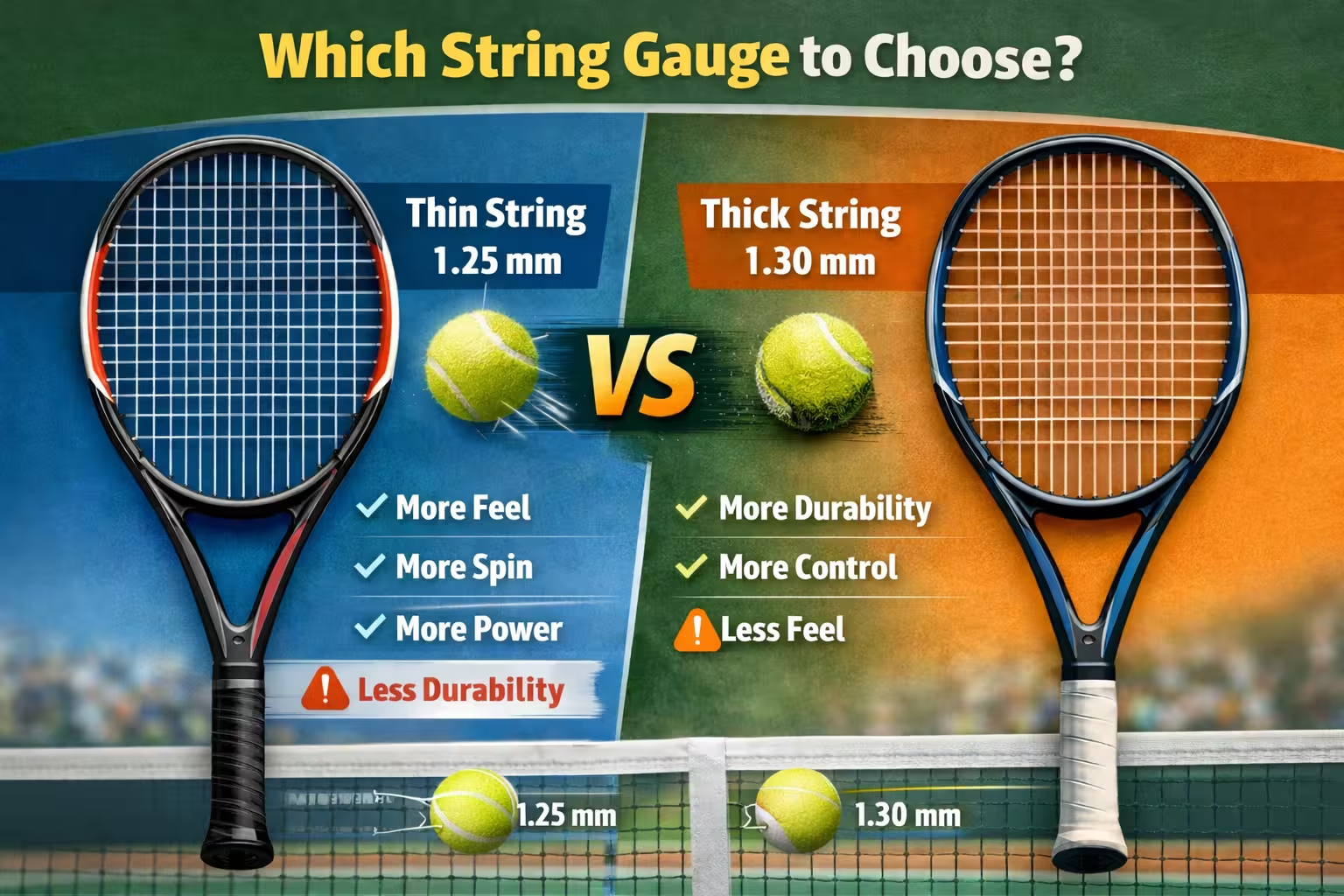
Most tennis players use 1.30 or 1.25 strings without venturing outside those parameters. The problem is that many people invest money in quality strings but string them at 1.30, losing all the benefits they offer. In this complete guide, we'll explain everything you need to know about string gauges to optimize your game.
What is String Gauge?
Gauge is the thickness of the string, measured in millimeters. The most common gauges in tennis are:
- 1.18-1.20 mm: Very thin strings
- 1.23-1.25 mm: Medium gauge (the most versatile)
- 1.28-1.30 mm: Thick strings (the most durable)
Choosing the right gauge can completely transform your game, giving you more spin, power and feel, or more control and durability depending on your needs.
Thin Strings (1.18-1.20 mm): Maximum Spin and Power
How Do They Work?
Thinner strings act as if you had a more open string pattern. Being thinner, they dig better into the ball's fuzz, which generates more friction and therefore more spin.
Advantages of Thin Strings
🎾 More Spin
Thin strings penetrate the ball's surface more easily, allowing the strings to move more freely (snapback) and generate more rotation.
⚡ More Power
Being more elastic and having less resistance than a thick string, they provide more power. This means you need less effort to achieve the same depth.
🎯 More Feel
Thin strings transmit vibrations better and give you more precise feedback on each shot. You feel exactly where you hit the ball.
Disadvantages
- Less durability: Thinner strings wear out faster
- Higher breakage risk: Especially in areas close to the frame
- May break without visible notching: Sometimes, the string is so thin it breaks with little warning
Who is it for?
- Players seeking maximum spin (heavy topspin)
- Tennis players with long, fast swings
- Fast court players who need more ball control
- Competitors who change strings frequently
Medium Strings (1.23-1.25 mm): The Perfect Balance
1.25 is probably the most versatile gauge on the market. It offers an excellent balance between all characteristics.
Advantages
- Good spin without sacrificing too much durability
- Enough power for most players
- Reasonable durability (better than 1.20, less than 1.30)
- Maintains tension better than thicker gauges
Who is it for?
- Intermediate and advanced players seeking versatility
- Tennis players who play 2-3 times per week
- Anyone wanting a middle ground between spin and durability
Thick Strings (1.28-1.30 mm): Maximum Durability and Control
Advantages of Thick Strings
🛡️ Greater Durability
Thicker strings resist wear much better. They can last up to twice as long as 1.20 under the same conditions.
📏 More Control
Being stiffer, the string provides less power, giving you more control over the depth and direction of your shots.
💪 Better Impact Resistance
When the ball hits the strings, they deflect less. Thick strings handle impact better, offering a more stable platform.
Disadvantages
- Less spin: Being thicker, they don't dig into the ball as much
- Less power: Less power output, you need more swing
- Less feel: Transmits less feedback
- Loses a lot of tension: This is the most serious problem
The Big Problem with 1.30
Here comes the key question you should ask yourself:
Do I prefer a string job that lasts long but ends up losing up to 2-2.5 kg of tension over time, or a string job that lasts less but maintains tension much better?
The Reality of Tension Loss
When we string a racquet, let's say at 23 kg, the strings start losing tension from the first hit:
- First 24 hours: 10-15% tension loss
- First week: Accumulated loss of 20-25%
- At 2-3 weeks: If you're using 1.30, you could be playing at 21 kg or less
The problem: You think you're playing the same, but technically you're playing with a completely different racquet. This can lead to:
- Technical flaws: You compensate for tension loss by changing your stroke
- Inconsistency: What worked two weeks ago doesn't work the same anymore
- Frustration: You don't understand why you're missing shots that used to work
The Advantage of Thinner Strings
A thinner string job (1.20-1.25) may last less in absolute terms, but maintains tension better throughout its life. This means:
- You play most of the time close to your initial tension
- You don't need to constantly adapt your technique
- Greater consistency in your shots
What Gauge Do You Need?
🎾 Beginners
If you're starting out, you need durability and comfort:
- Recommended: 1.28-1.30 mm
- Why: They last longer, are more economical in the long run, and give you control while developing your technique
- Alternative: 1.25 mm if you already generate good swing speed
🏃 Intermediate
You already have technique and seek to improve your game:
- Recommended: 1.25 mm (the most versatile)
- Why: Perfect balance between spin, power and durability
- Tip: If you're at 1.30, try dropping to 1.25. You'll notice the difference immediately
🏆 Advanced/Competitors
You know what you need and change strings frequently:
- Recommended: 1.20-1.23 mm for maximum spin
- 1.25 mm for training if you want to save money
- Why: You need the best performance, and you change strings every 10-15 hours of play
📍 By Court Type
Fast Courts (Grass, Fast Hard Courts)
- 1.20-1.23 mm: The ball comes off fast, you need more control and spin
Slow Courts (Clay)
- 1.25-1.28 mm: You can afford a slightly larger gauge because the court already gives you control
Medium Courts (Standard Hard Courts)
- 1.25 mm: The perfect balance
Most Popular Strings on the Market
If you want to experiment with different gauges, these are some of the most used strings by professional and amateur players:
Luxilon ALU Power
The most iconic string in modern tennis. Used by Novak Djokovic and many other professionals. Available in 1.25 and 1.30 gauges.
- 1.25 mm: Excellent balance between spin and durability
- 1.30 mm: Maximum durability for frequent players
Perfect for players seeking control, durability and a firm feel. ALU Power is especially good for flat shots and moderate topspin.
Head Hawk Touch
One of the best-feeling strings on the market. Softer than ALU Power while maintaining excellent durability. Available in 1.20 and 1.25.
- 1.20 mm: For maximum spin and feel
- 1.25 mm: The perfect balance between comfort and performance
Ideal for players seeking a comfortable polyester string without sacrificing spin. Excellent option for players with tennis elbow.
Babolat RPM Blast
Rafael Nadal's preferred string. Designed specifically for maximum spin. Available in 1.25 and 1.30.
- 1.25 mm: The most popular gauge, combines brutal spin with acceptable durability
- 1.30 mm: For intensive training, sacrifices some spin for greater durability
If your game is based on heavy topspin and you have a fast swing, this is your string. The octagonal surface generates more friction with the ball.
Expert Tips
1. Not All 1.25s are Equal
Gauge is just one factor. The string composition (polyester, multifilament, natural gut) affects as much or more than thickness.
2. Test Before Committing
String just one racquet first, play 2-3 times, and evaluate:
- Do you feel more spin?
- Does it tire your arm more or less?
- How long is it lasting?
3. Combine Gauges in Hybrid
If you string hybrid (different strings in mains and crosses):
- Thinner mains (1.20-1.23): More spin
- Thicker crosses (1.25-1.28): More durability
4. Adjust Tension When Changing Gauge
If you drop gauge (for example, from 1.30 to 1.25):
- Increase tension by 1-2 kg to compensate
- Thinner string provides more power, you need more tension for the same control
5. Change Strings Regularly
General rule: Change as many times per year as you play per week
- Play 3 times/week = Change every 4 months (3 times per year)
- Play 5 times/week = Change monthly
6. Don't Wait for Them to Break
"Dead" strings (with significant tension loss) are worse than broken ones:
- They make you develop bad technique
- Can cause injuries (elbow, wrist)
- You don't know how you're really playing
The Question You Must Ask Yourself
What's more important to you?
Option A: Maximum Durability
- Gauge: 1.28-1.30 mm
- You pay: Fewer string changes
- You sacrifice: Spin, power, feel, tension stability
Option B: Best Performance
- Gauge: 1.20-1.25 mm
- You pay: More frequent changes
- You gain: More spin, power, feel, stable tension
Our Recommendation
If you currently use 1.30, we strongly recommend trying 1.25. The change isn't drastic in durability, but it is in performance.
If you're already at 1.25 and play on fast courts, try 1.20. The difference in spin and feel is noticeable.
Conclusion
String gauge is one of the most important but most overlooked aspects of tennis equipment. Many players invest hundreds of euros in high-end racquets but use inadequate strings that limit their potential.
Remember:
- There's no "perfect" gauge for everyone
- Your swing, level, playing frequency and court type determine the ideal gauge
- Testing is the only way to know what works for you
- A good string job (gauge + tension + string type) can improve your game more than changing racquets
The key is to experiment. Tennis is a game of feel, and no universal formula will tell you exactly what you need. Not even two forehands from the same player are identical, so there can't be a perfect setup for everyone.
Have questions about which gauge to try? You can check out our athletes and discover what setups the pros use to achieve their goals.
Last updated: March 8, 2026